

Flexible Cabling
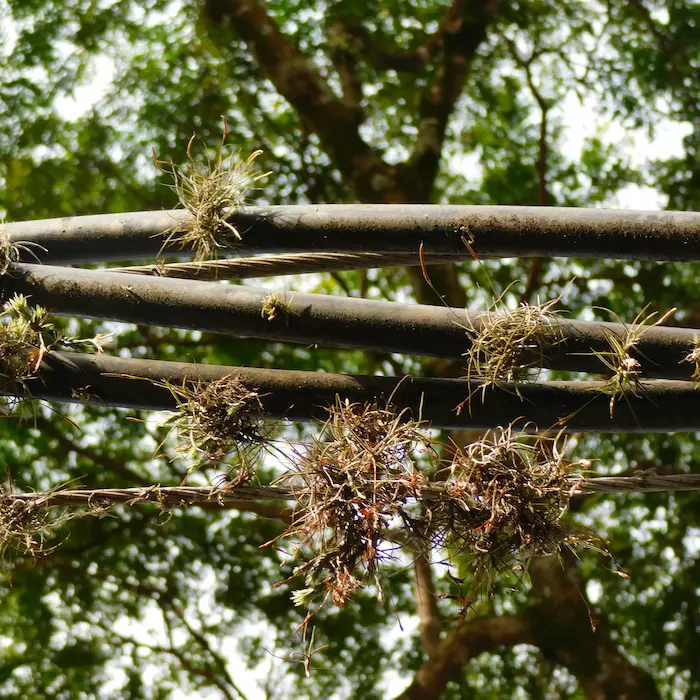
Synthetic cables installed high in the canopy between stems. They allow some natural movement while limiting excessive spreading in wind.
Tree cabling and bracing in Launceston is for trees worth keeping that have a structural weakness, such as a narrow fork with included bark or a long, heavy limb. A support system limits movement so the weak point is under less strain in wind.
It is not a cure for a dying or badly decayed tree. We only recommend support where the tree is healthy enough to justify it, and usually alongside pruning to reduce load.
Call +61 483 709 394 or send photos of the fork or limb that concerns you.

Synthetic cables installed high in the canopy between stems. They allow some natural movement while limiting excessive spreading in wind.

Steel cable systems that restrict movement more firmly, used where a defect is more advanced.
Threaded rods installed through a weak union or crack to reduce movement at that point.
Usually combined with cabling higher in the canopy.
A single cable between two stems above a weak fork. The simplest arrangement.
Three stems linked in a triangle so each supports the others. Used on multi-stemmed trees.
Several stems linked to a central point. Suited to trees with many leaders.
The right system depends on the defect, the species and how much movement the tree should keep.
| Option | Characteristics | Typical applications | Considerations |
|---|---|---|---|
| Flexible synthetic | Allows natural sway. | Preventive support on sound forks. | Lighter, non-invasive, but needs periodic checks for wear. |
| Static steel | Restricts movement firmly. | More advanced weaknesses. | Requires drilling and can affect how the tree adapts its wood. |
| Bracing rod | Holds a union together. | Cracked or splitting forks. | Invasive; placement must avoid decay pockets. |
| Load reduction pruning | Removes end weight. | Used with or instead of cabling. | Reduces strain without adding hardware. |
Support systems manage risk; they do not remove it. We weigh these points before recommending one.
The tree must be healthy enough to keep growing around the hardware.
Support is most useful where failure would hit something valuable but removal is not wanted.
Included bark and co-dominant stems often suit cabling; advanced decay often does not.
Every system needs re-inspection. Owners must be willing to keep that up.
We assess the defect, the tree's health and whether support is justified.
We choose the system, anchor points and configuration.
Pruning reduces end weight where needed before installation.
Cables or rods are installed by climbers at the planned height.
We set a check interval and record the installation details.
Correct placement matters more than the hardware itself.
Cables are usually set well up the stems, where they give the most leverage.
Flexible systems use slings around the stem; static systems use through-bolts.
Some systems include absorbers that soften sudden loads in gusts.
Installation date, system type and positions are recorded for future checks.

Load is reduced by pruning and a flexible cable installed between the stems.
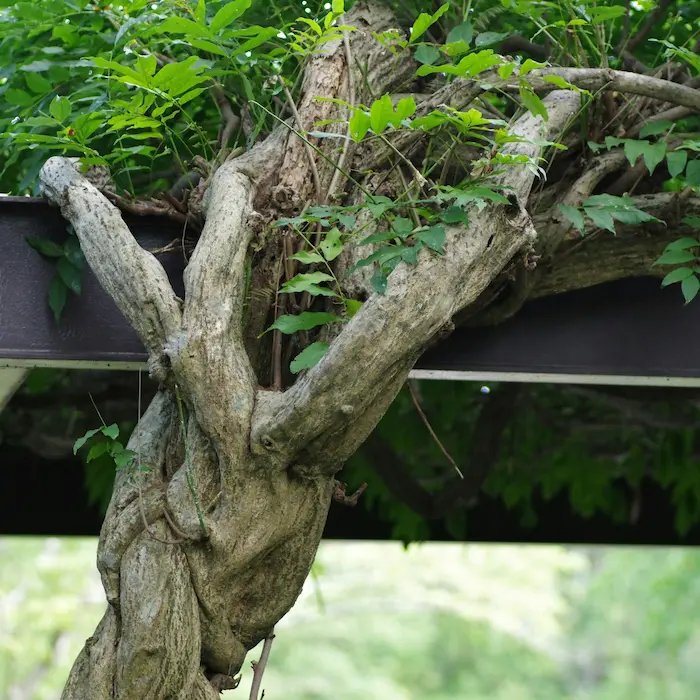
The limb is shortened and supported to reduce strain at its union.

A rod and static cable are considered after a closer look at the wood.
We assess and install support systems in gardens and grounds across the suburbs below, particularly where large, older trees grow close to homes.
Older homes and mature gardens east of the centre, cables for weak forks.
View detailsWhen a defect is too advanced for support, removal may be needed.
View serviceLoad reduction pruning usually goes hand in hand with cabling.
View serviceGrind the stump if a supported tree later fails.
View serviceCall us if a cabled fork splits in a storm.
View serviceA risk assessment can show whether support is a proportionate response.
View serviceClear around a valued tree to reduce wind load.
View servicePlant a successor while the old tree is supported.
View serviceCable inspections as part of a site program.
View serviceCabling is priced on the system type, the number of cables or rods, tree size and any pruning done at the same time. Future inspections are priced separately.
| Single flexible cable | Lower range for a support job. |
|---|---|
| Multi-cable systems | Mid range; more climbing time and hardware. |
| Static cable with bracing rods | Upper range; drilling and more hardware. |
| Re-inspection visit | Priced as a short inspection. |
We quote only after inspecting the tree, because the design depends on what we find.
Request a Personalised QuoteNo support system makes a tree risk-free. Cabling reduces the chance of a weak fork or limb failing by limiting movement and sharing load. It works best on healthy trees with specific defects, combined with pruning and regular inspection.
It depends on the system and conditions. Synthetic cables are checked for wear and replaced when needed. Steel systems last longer but are also checked, as trees grow and loads change. We give a re-inspection interval at installation.
Flexible systems that sling around stems are non-invasive. Static systems and rods involve drilling, which creates small wounds. Correctly placed hardware is tolerated by healthy trees, which grow around it.
No. Trees with advanced decay, poor health or very weak root systems are not good candidates. We will tell you if support would not be a sensible spend.
Often, yes. Reducing end weight lowers the load on the weak point, so the support system has less work to do.
We set the interval at installation based on the system and the tree. Many systems are checked every year or two, and after any severe storm. Checks look at wear on the cable, movement at anchors and how the defect is changing as the tree grows.
Send photos of the fork or limb that worries you, and the whole tree for context.
Call +61 483 709 394 to book an inspection.
When two stems grow from a narrow V, bark can become trapped between them. This included bark stops the wood from joining properly, so the fork is held together by less wood than it appears. In wind, the stems move independently and stress the joint.
Cabling links the stems higher up so they move together. That reduces the leverage on the joint and lowers the chance of a split.
We will not install hardware in a tree we believe is beyond saving, and we will not sell a system without a plan to inspect it. A forgotten cable is no better than none.
Gusty westerly winds funnel through the Tamar Valley, and exposed hillside gardens feel them most. Large, older trees with multiple leaders, such as elms, oaks and some eucalypts, are the ones most often found with weak forks.
Before suggesting a cable, we compare it with the simpler option of reducing the heavier stem. Sometimes pruning alone is enough. When it is not, support plus pruning usually gives a valued tree a longer, safer future than either one on its own.
Wind, Frost and Older Trees in Launceston