
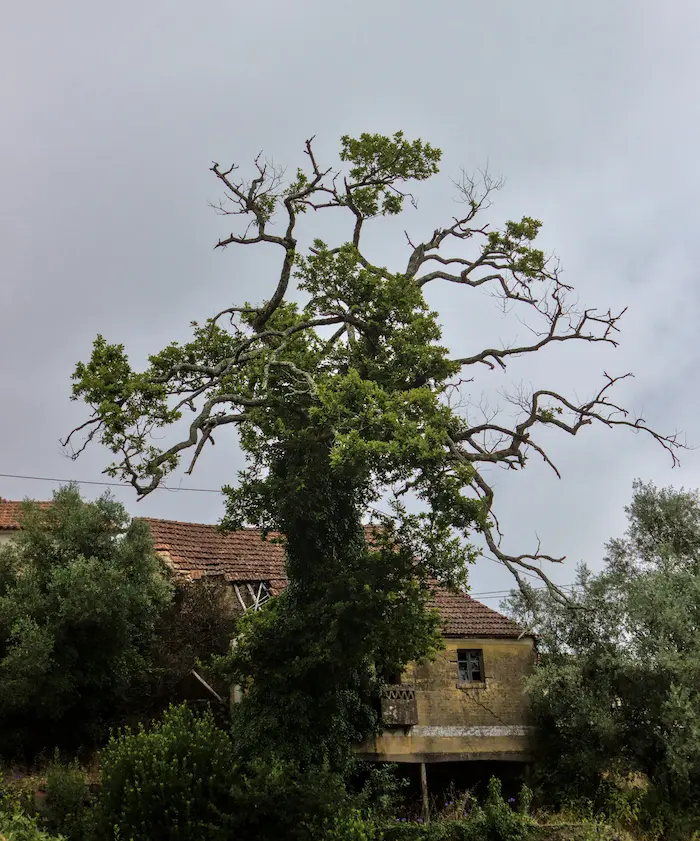
Tree on a House or Shed
The tree's weight may be holding damaged roof sheets or framing in place. We remove it in a controlled order so nothing collapses further as the load comes off.
Emergency tree removal in Launceston usually follows strong westerly winds, heavy rain on saturated ground or a limb that gives way on a still day. A tree on a roof, across a driveway or hanging over a footpath needs to be dealt with quickly and carefully.
We work out what is still under load, what could move next and what must be cleared first. Often the urgent part is short: remove the immediate hazard, make the site safe and restore access. The rest can be booked once the pressure is off.
If anyone is hurt or a power line is down, call 000 first. Then call us on +61 483 709 394.

The tree's weight may be holding damaged roof sheets or framing in place. We remove it in a controlled order so nothing collapses further as the load comes off.

Fallen trunks and limbs across driveways or paths are cut and moved so vehicles and people can get through.

A limb caught in the canopy, sometimes called a hanger, can drop at any time. These are removed with rigging from a safe position.
Remove or secure the part of the tree that poses immediate danger and set up an exclusion zone.
Clear driveways, doors and paths so the household or business can use the property.
Remove the rest of the tree, grind the stump if wanted and clean the site. This stage can be scheduled for a later day.
Splitting the work this way often keeps cost down because the follow-up can be done in daylight with the right gear.
Not every emergency needs everything done at once. Here is how the common choices compare.
| Option | Characteristics | Typical applications | Considerations |
|---|---|---|---|
| Make-safe only | Hazard removed, site secured. | After-hours callouts and severe weather. | The remaining tree must still be dealt with soon. |
| Make-safe and access | Hazard removed and paths cleared. | Driveways and entries blocked by debris. | Wood may be stacked on site until the follow-up visit. |
| Full removal same visit | Tree removed and site cleaned. | Daylight jobs with good access. | Takes longer before the site is fully open again. |
| Inspection of nearby trees | Check of trees affected by the same event. | Stands where one tree has failed and others are similar. | Prevents a second failure from the same storm. |
Damaged trees behave unpredictably. Before cutting, we read the site.
Trunks pinned under weight or bent across structures hold energy that can release violently when cut.
If lines are involved, we stay clear until the network operator has made them safe.
We look at whether the tree is propping up damaged roof framing before removing it.
Saturated soil that let one tree fall can also stop machinery from getting close.
Tell us what has happened, whether anyone is hurt, whether lines are down and what the tree is resting on.
On site, we check tension, lines, structures and remaining limbs before anyone cuts.
The immediate danger is removed or secured and the area is cordoned.
We open up entries and driveways and stack or chip debris.
We quote the rest of the work, including stump grinding and checks on nearby trees.
Storm work calls for a slower, more controlled approach than a planned removal.
Used to take the load off a trunk before cutting, so it moves in a controlled direction.
Let us reach damaged canopies without climbing a tree that may be cracked.
Clear debris quickly once the hazard is controlled.
Portable lighting where make-safe work cannot wait for daylight.

The limb is rigged and lifted off in pieces so the roof can be tarped by others.

The trunk is cut and moved to free the driveway, with removal finished the next day.
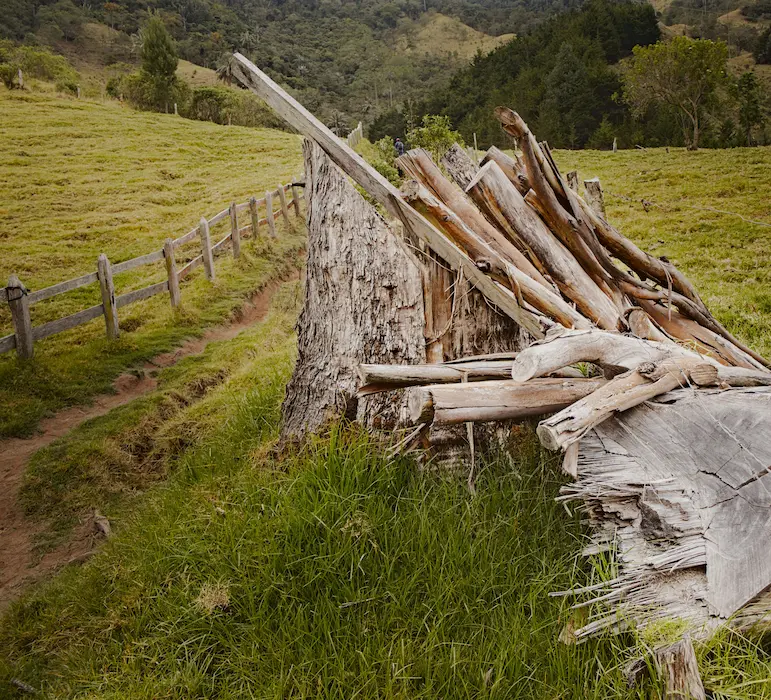
The tree is cleared from both properties and the fence line left ready for repair.
We respond across the suburbs below. Exposed hillside streets tend to take the brunt of strong westerlies, while low-lying areas can see trees topple when ground is waterlogged.
Older homes and mature gardens east of the centre, urgent storm call-outs.
View detailsPlanned removal of a damaged tree once it is stable.
View serviceNeighbouring trees often have broken limbs that need pruning after a storm.
View serviceOnce the fallen tree is gone, the stump and torn roots can be ground out.
View serviceInsurers sometimes ask for a written account of why a tree failed.
View serviceClear fallen timber and debris from a larger block.
View serviceReplace a storm-lost tree with a better-suited one.
View serviceTrees that survived with a weakened fork may be candidates for support.
View serviceAfter-storm checks for business and strata grounds.
View serviceEmergency work is priced on the hazard, the equipment needed and the timing. After-hours make-safe work costs more than the same work booked in normal hours, which is one reason we separate the urgent part from the clean-up.
| Make-safe in business hours | Priced on the hazard and crew time. |
|---|---|
| After-hours or severe weather | Higher because of call-out timing and conditions. |
| Full removal follow-up | Quoted as a normal removal once the site is safe. |
| Insurance documentation | Photos and notes can be provided; written reports are priced separately. |
We confirm the scope with you before work starts, even in an emergency.
Request a Personalised QuoteGet everyone out of the affected area. If anyone is injured or a power line is involved, call 000 and stay well clear. Then call us. Take photos for your insurer if it is safe. Do not try to cut the tree yourself; trunks under tension can spring when cut.
Many home insurance policies cover removing a tree that has damaged a building or fence, but cover varies. Check your policy and speak to your insurer. We can provide photos and an account of the work to support a claim.
Call +61 483 709 394 to check availability. In widespread storms demand is high, so we prioritise jobs where people or buildings are at risk. If we cannot attend straight away we will say so plainly.
Stay well clear and contact TasNetworks or 000. Trees touching network lines must be made safe by the network operator before we can work on them.
Sometimes. A tree that has lost one limb may be pruned and kept. A tree with a split trunk or lifted root plate usually needs removal. We assess this once the immediate danger is dealt with.
If people are safe and no lines are involved, call +61 483 709 394 and tell us what has happened. Photos sent by message help us bring the right gear.
For storm damage that is not yet urgent, use the quote form and we will schedule an inspection.
A standing tree can be read. A fallen or broken one is under forces that are hard to see: a trunk bent across a fence, a limb pinned under another, roots half out of the ground. Cutting the wrong piece first can drop weight onto a roof or swing a log toward someone.
That is why the first visit is usually about control rather than speed. We take the load off in a planned order, make the area safe and then decide what can wait until conditions improve.
We will not work on trees in contact with power lines, and we will not put a climber into a tree we believe could fail further. In those cases we wait for the network operator or use a platform or crane instead.