
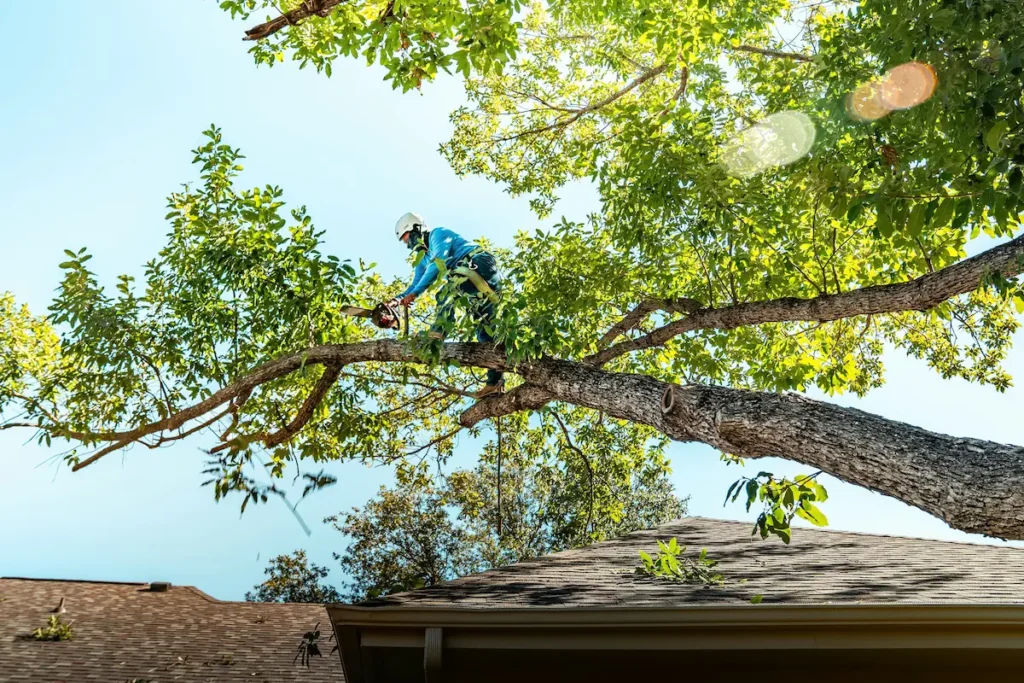
Most trees need very little professional attention. But there are moments when an arborist's eye saves money, prevents damage or keeps people safe. This guide covers the warning signs to watch for, the situations where advice is worth getting even if nothing looks wrong, and what you can safely do yourself.
Direct Answer: Call When You See Change, Risk or a Decision Ahead
Get an arborist when a tree changes in a way that worries you, when a tree stands over something or someone important and you are unsure of its condition, or when you face a decision such as building near a tree, buying a property with large trees or deciding whether to remove one.
You do not need an arborist to trim a low hedge or remove a small branch you can reach from the ground. You do need one for anything at height, near structures or power lines, or where the tree's health or stability is in question.
Key Warning Signs in Trees
Dead or hanging limbs
Dead branches have no leaves in the growing season, have peeling bark and snap easily. A broken limb caught in the canopy, known as a hanger, can fall at any time.
Cracks and splits
A crack in the trunk or down through a fork is a serious warning sign. Narrow V-shaped forks with bark trapped between the stems are also prone to splitting.
Fungi and decay
Mushrooms, brackets or conks on the trunk or roots often mean decay inside. Soft or crumbly wood, cavities and oozing sap can also point to internal problems.
Root and soil changes
Soil heaving or cracking on one side of the tree, exposed or broken roots, or a new lean can mean the root plate is moving. This needs prompt attention.
Canopy decline
Thinning foliage, leaves browning out of season or dieback from the top can signal stress, disease or root problems.
Keep people, pets and cars away from where the tree would fall, and arrange an inspection promptly. If the tree is near power lines, stay clear and contact TasNetworks.
Situations Where Advice Pays Off
- Buying a property with large trees close to the house
- Planning an extension, pool, driveway or new services near a tree
- A neighbour raising concerns about your tree, or you about theirs
- Branches touching the roof, gutters or power connections
- Trees over rental properties, where landlords want to show they are safe
- After a major storm, when trees may have hidden damage
- Planting a new tree and wanting the right species and spot
- Commercial or strata sites needing regular checks and records
Step-by-Step: What to Do Before You Call
1. Look from a safe distance
Walk around the tree, look up into the canopy and down at the base. Do not climb or put yourself under a suspect limb.
2. Take photos
Photograph the whole tree, the area of concern and the base. If you have older photos, compare them; a change in lean is easier to spot side by side.
3. Note what is underneath
List what the tree could hit: roof, shed, fence, car, footpath, play area. This shapes the urgency.
4. Check access
Measure the narrowest gate or path between the street and the tree. It affects which equipment can be used.
5. Call or send a quote request
Share what you have noticed and the photos. An arborist can then tell you whether it needs a visit soon, a routine check or no action at all.
Common Mistakes
- Waiting until a limb falls before getting an inspection
- Cutting large limbs yourself from a ladder
- Assuming a tree is safe because it has stood for decades
- Assuming a tree is dangerous because it is large
- Hiring someone to lop or top a tree to make it smaller
- Ignoring fungi at the base because the canopy looks healthy
- Working near power lines
The ladder mistake is worth stressing. A cut limb can swing, kick back or pull a ladder over. If a branch is above head height or near a structure, it is a job for someone with ropes, rigging and training.
What an Arborist Will Do on the Visit
On a typical visit, an arborist walks around the tree, looks at the canopy for deadwood and defects, checks the trunk and forks for cracks and cavities, and inspects the base and roots for decay, fungi and soil movement. Simple tools such as a sounding mallet or probe may be used to check for hollow sections.
They will also look at the site: what the tree could hit, how gear would reach it and whether approvals might be needed. You should leave the visit knowing what is happening with the tree and what the realistic options are.
If the visit raises questions that a ground-level look cannot answer, such as possible decay high in the canopy, the arborist should say so and explain what a closer inspection would involve and cost, rather than guessing.
Local Considerations in Launceston
Launceston winters are cold and wet, with frost and fog common in the Tamar Valley, and summers can bring dry spells. Gusty westerlies regularly test trees, particularly on exposed hillsides. After a big wind event, it is worth walking around your trees and looking for fresh cracks, hangers and lifted soil.
Suburbs differ. Low-lying Invermay can have waterlogged ground that affects root stability. Hillside blocks in Trevallyn and West Launceston often have trees above homes, where a failure would travel downhill. Established areas such as East Launceston and Newstead have many large, older trees close to houses.
Deciduous trees are easiest to assess structurally in winter when the leaves are down, while canopy health is easier to judge in the growing season. A good time for a check depends on what you want to know.
Seasonal Checks Worth Doing Yourself
You do not need to be an expert to spot most early warning signs. A short walk around your trees a few times a year, from a safe distance, picks up most changes before they become urgent.
After winter storms
Look for hanging or broken limbs caught in the canopy, fresh cracks in forks, and soil that has lifted or cracked near the base. Wet ground combined with strong wind is when root plates are most likely to move.
In spring
As deciduous trees leaf up, note any sections that stay bare. Dead limbs are easiest to spot against new growth.
In summer
Watch for leaves wilting or browning out of season during dry spells, and for sudden limb drop in eucalypts during hot, still weather. Keep people out from under trees that have dropped limbs before.
In autumn
Check gutters and roof valleys as leaves fall, and note any new fungi at the base, which often appear after autumn rain.
When You Do Not Need an Arborist
Not every tree question needs a professional visit. Light pruning of small shrubs and low branches you can reach from the ground with hand tools, sweeping up leaf litter and mulching around young trees are all reasonable jobs to do yourself. Shaping a small hedge is usually fine too.
The line is crossed when the work involves height, heavy limbs, chainsaws, structures underneath, power lines, or any question about whether the tree is healthy or stable. If in doubt, a quick message with photos costs nothing and can save a great deal.
Frequently Asked Questions
Get Professional Help
If you have noticed any of these signs, or a decision about a tree is coming up, our arborist service is the place to start. For written findings, see our arborist reports and tree risk assessments page, and if a tree has already failed, our emergency tree removal page explains what to do. Call +61 483 709 394 or request a free quote.
Questions about your own property?
Call Now — +61 483 709 394For a local assessment, explore our Arborist Reports and Tree Risk Assessments or ask about work in East Launceston.